
Is it really possible to secure clean, safe water while also being environmentally conscious? Many homeowners in Fort Worth, TX, are discovering that eco-friendly water filtration methods not only improve water quality but also contribute to sustainability. As you explore various options, consider how simple changes can make a significant impact on both your health and the community. Let’s take a closer look at ten innovative ideas that could transform your home’s water supply.
1. Rainwater Harvesting Systems
Rainwater harvesting systems can be a game-changer for your home or business. By capturing and storing rainwater, you create a sustainable water source that can greatly lower your utility bills.
Imagine using this free resource for irrigation, car washing, or even flushing toilets! You’ll reduce your reliance on municipal water, helping conserve this precious resource.
Installing a rainwater harvesting system is easier than you think. With the right setup, you can collect rainwater from your roof, channel it into storage tanks, and filter it for various uses.
Plus, you’ll contribute to environmental sustainability, making a positive impact on your community. When you partner with a reliable plumbing service like Stinson Plumbing, you’ll get expert guidance on the best solutions tailored to your needs, including reliable water filtration installations to ensure the rainwater you collect is safe and clean.
Embrace this eco-friendly option, and enjoy both the financial and environmental benefits it brings to your property.
2. Activated Carbon Filters
When you’re looking for an effective way to purify your water, activated carbon filters are a fantastic option.
These filters trap impurities and contaminants, improving the taste and odor of your water. They’re especially great for removing chlorine, sediment, and volatile organic compounds, making your drinking water safer and more enjoyable.
Installing an activated carbon filter is simple, whether you choose a countertop model or an under-sink system.
They’ll fit seamlessly into your home, providing continuous filtration without taking up much space. Plus, they’re eco-friendly since they reduce the need for bottled water, cutting down on plastic waste.
Remember to replace the filter regularly to maintain peak performance.
With their affordability and efficiency, activated carbon filters can be an excellent addition to your home’s water purification system. Whole-house filtration systems provide an added layer of protection, ensuring that every faucet in your home delivers safe and clean water.
You’ll not only enhance your water quality but also contribute to a healthier environment for your family.
3. Reverse Osmosis Systems
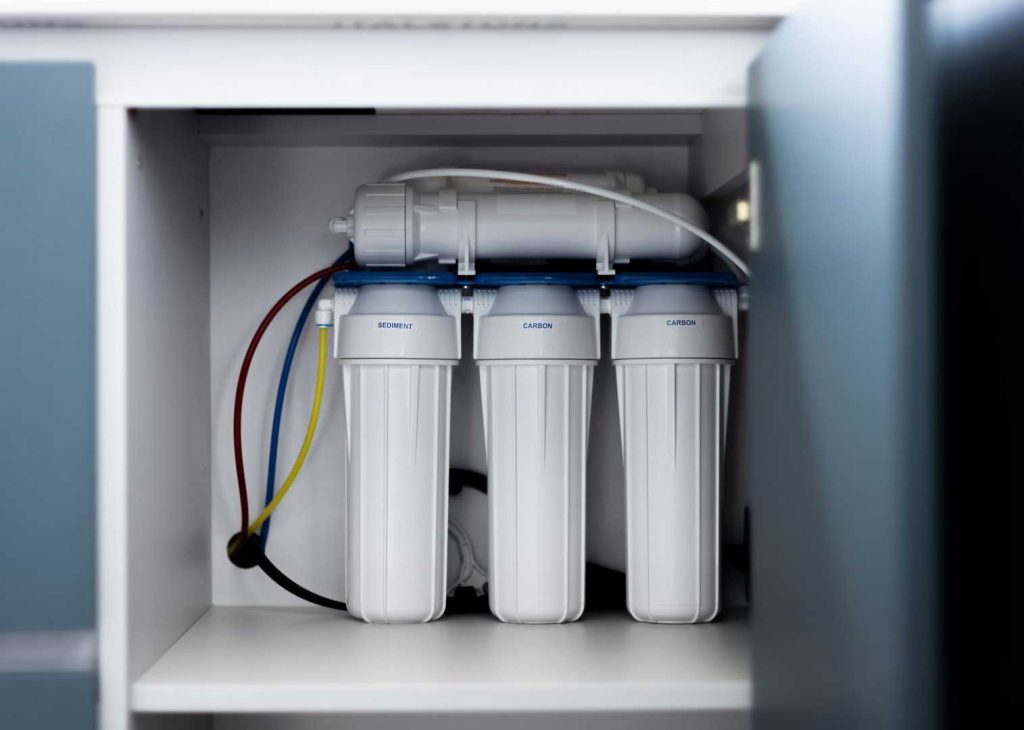
Reverse osmosis systems are a powerful solution for purifying water in your home. They effectively remove contaminants, providing you with clean, safe drinking water.
Here are three key benefits of using reverse osmosis:
- Highly Effective Filtration: These systems can remove up to 99% of common impurities, including lead, chlorine, and fluoride, ensuring your water is as pure as possible.
- Improved Taste and Odor: Say goodbye to unpleasant tastes and smells in your tap water. Reverse osmosis enhances the flavor, making it enjoyable to drink and cook with.
- Cost-Effective: Investing in a reverse osmosis system can save you money over time by reducing your reliance on bottled water. Additionally, the Halo Water Filtration System offers an eco-friendly solution that improves the quality of your entire home’s water supply.
4. Ultraviolet (UV) Water Purifiers
Ultraviolet (UV) water purifiers use light to eliminate harmful microorganisms without chemicals, making them an eco-friendly choice for your home.
You’ll appreciate the benefits of UV treatment, like improved water safety and taste. Additionally, consider integrating eco-friendly practices, such as water-softening systems, to further enhance your home’s water quality. Before installation, consider factors such as your water quality and system compatibility to ensure peak performance.
How UV Purifiers Work
While you may be familiar with various water purification methods, ultraviolet (UV) purifiers stand out for their effectiveness in eliminating harmful microorganisms.
These systems use UV light to disrupt the DNA of bacteria, viruses, and other pathogens, rendering them incapable of reproduction.
Here’s how they work:
- Water Flow: As water passes through the purifier, it flows past a UV lamp.
- UV Exposure: The UV light penetrates the microorganisms, targeting their genetic material.
- Deactivation: Once exposed, harmful organisms are destroyed, ensuring your water is safe to drink.
This chemical-free method is efficient and doesn’t alter the water’s taste or odor, making it an excellent choice for eco-friendly filtration in your Fort Worth home.
Benefits of UV Treatment
Using UV purifiers not only effectively eliminates harmful microorganisms but also offers several benefits that enhance your water quality.
First, they provide a chemical-free solution, so you won’t have to worry about adding any potentially harmful substances to your water. This means safer drinking water for you and your family.
Additionally, UV treatment is highly efficient and requires minimal maintenance compared to other systems. It operates quickly, treating water on demand without the need for storage tanks.
You’ll also save space, as UV purifiers are compact and can fit easily under your sink.
Finally, they’re energy-efficient, consuming less power than traditional filtration methods.
With these advantages, UV purifiers are a smart choice for your home’s water needs.
Installation Considerations
When considering installing a UV water purifier, it’s crucial to assess your plumbing system and available space.
Here are three key factors to keep in mind:
- Location: Choose a spot near your water source and where you can easily access the unit for maintenance.
- Electrical Supply: Verify you have a nearby electrical outlet, as UV purifiers require power to operate effectively.
- Flow Rate: Check the flow rate of your water supply to select a UV system that meets your household’s needs.
Installing a UV water purifier can be a fantastic choice for cleaner water.
5. Bio-Sand Filters
Bio-sand filters are an effective and eco-friendly way to purify water right at home.
You’ll appreciate the benefits they offer, including improved water quality and low maintenance requirements.
Let’s explore how they work, their advantages, and some tips for installation and upkeep.
What Are Bio-Sand Filters?
Although many water filtration systems exist, bio-sand filters stand out for their eco-friendly approach to purifying water.
These filters utilize natural processes to remove contaminants, making them a sustainable choice for your home.
Here are three key features of bio-sand filters:
- Layered Design: They consist of layers of sand and gravel, allowing for effective filtration of particles and pathogens.
- Biological Action: Beneficial microbes thrive in the sand, breaking down harmful substances as water passes through.
- Low Maintenance: Once set up, bio-sand filters require minimal upkeep, offering a hassle-free solution for clean water.
Benefits of Bio-Sand Filters
Not only do bio-sand filters provide an eco-friendly way to purify water, but they also offer numerous benefits that can enhance your daily life.
These filters use natural processes to remove contaminants, ensuring you get clean, safe water without relying on chemicals. They’re low-maintenance and can last for years, saving you time and money.
You’ll appreciate the improved taste and odor of your water, making hydration more enjoyable. Bio-sand filters also help reduce plastic waste by minimizing the need for bottled water.
Plus, they’re perfect for Fort Worth’s unique climate, as they adapt well to local conditions. By choosing a bio-sand filter, you’re not just improving your water quality; you’re also contributing to a more sustainable future.
Installation and Maintenance Tips
When it comes to installing and maintaining your bio-sand filter, understanding the essential steps can make the process smoother and more effective.
Here are three key tips:
1. Choose the Right Location: Make sure the filter is placed in a well-drained area, away from heavy foot traffic and potential contaminants.
2. Regular Maintenance: Clean the surface layer of sand every few weeks to remove accumulated debris and prevent clogging.
Additionally, check for any leaks or structural issues.
3. Monitor Water Quality: Test your filtered water regularly to verify it meets safe drinking standards.
If you notice changes, it may indicate a need for deeper cleaning or adjustments.
Following these tips will help you keep your bio-sand filter functioning efficiently for years to come.
6. Whole House Filtration Systems
Investing in a whole-house filtration system can greatly improve the quality of your water, providing peace of mind for you and your family.
These systems filter all the water entering your home, ensuring that every tap provides clean, safe drinking water. You’ll notice a significant reduction in contaminants such as chlorine, lead, and sediment, enhancing both taste and health.
With a whole-house system, you won’t have to worry about refilling pitchers or maintaining multiple filters. Plus, you’ll protect your plumbing and appliances from buildup, extending their lifespan.
Installation might seem intimidating, but working with a trusted local plumber like Larry Stinson Plumbing can simplify the process. They’ll guide you in selecting the right system tailored to your needs.
Ultimately, a whole-house filtration system not only improves your water quality but also contributes to a more eco-friendly lifestyle by reducing plastic waste from bottled water.
7. Ceramic Water Filters
If you’re looking for an effective and eco-friendly way to purify your drinking water, ceramic water filters are an excellent choice.
These filters use natural materials to remove impurities, providing you with clean, safe drinking water right at home.
Here are three key benefits of ceramic water filters:
- Effective Filtration: They can remove bacteria, sediment, and other contaminants, ensuring your water is safe to drink.
- Sustainable Material: Made from natural clay, ceramic filters are biodegradable and reduce plastic waste compared to typical filter options.
- Low Maintenance: They require minimal upkeep; simply rinse and scrub occasionally to keep them efficient.
8. Water Distillation Units
Water distillation units offer a highly effective way to purify your drinking water. By heating water to its boiling point, these units convert it to steam, then condense it back into liquid, leaving contaminants behind. This process removes bacteria, heavy metals, and other impurities, ensuring you have clean and safe water.
Installing a water distillation unit in your Fort Worth home means you’re investing in a reliable solution for your family’s health. They’re relatively easy to maintain and can produce gallons of distilled water, perfect for drinking or cooking.
Plus, you’ll reduce your reliance on bottled water, which helps the environment.
While the initial cost may be higher, the long-term benefits, like clean water and lower utility bills, make it worthwhile. When you’re ready to make the switch, consider reaching out to local experts, like Stinson Plumbing, to help you find the best unit for your needs.
9. Ion Exchange Systems
While many homeowners seek effective ways to guarantee clean drinking water, ion exchange systems stand out as a reliable option.
These systems work by replacing harmful ions in your water with safer ones, making your drinking water cleaner and healthier.
Here are three benefits of ion exchange systems:
- Reduces Hardness: They effectively remove calcium and magnesium, preventing scale buildup in your pipes and fixtures.
- Improves Taste: By eliminating unwanted minerals, these systems enhance the taste and clarity of your water.
- Environmentally Friendly: Ion exchange systems use less energy and fewer chemicals compared to traditional treatment methods, making them a greener choice.
10. DIY Natural Water Filtration Methods
When it comes to DIY natural water filtration methods, you can create effective systems using simple materials like sand, gravel, and activated charcoal.
These methods not only purify your water but also harness nature’s resources in an eco-friendly way.
Sand and Gravel Layers
Natural water filtration methods, such as sand and gravel layers, offer an eco-friendly way to purify your water.
This simple DIY method can effectively remove sediments and contaminants, making your water cleaner and safer to use.
Here’s how to get started:
- Gather Materials: You’ll need sand, gravel, and a container to hold the layers.
- Layering: Start with a layer of gravel at the bottom, then a layer of coarse sand, and finally a layer of fine sand on top.
- Filtering Process: Pour your water slowly through the layers, allowing it to filter naturally.
Activated Charcoal Filtration
One effective DIY water filtration method is using activated charcoal, which can greatly improve the taste and quality of your drinking water.
This natural filter adsorbs impurities, chemicals, and odors, making your water safer and more enjoyable to drink.
To create your own activated charcoal filter, you’ll need a clean container, activated charcoal, sand, and gravel.
Layer the materials in the container, starting with gravel at the bottom, then sand, and finally activated charcoal.
Pour your water through this setup, and let it filter for a few hours.
Always guarantee you replace the charcoal regularly to maintain its effectiveness.
You’ll appreciate the cleaner, fresher water produced by this simple, eco-friendly method.
Plant-Based Filtration Systems
While you mightn’t think of plants as water filters, incorporating plant-based filtration systems can offer an innovative and eco-friendly solution for purifying your drinking water.
These systems utilize the natural properties of specific plants to remove contaminants, ensuring cleaner water for your home. Here are three effective methods you can try:
- Aquatic Plants: Incorporate plants such as water hyacinth or duckweed into a water tank; they absorb toxins and improve water quality.
- Sand and Gravel Layers: Create a DIY filter using layers of sand, gravel, and activated charcoal, topped with plant roots for added filtration.
- Biofilter Garden: Build a small biofilter garden, where plants naturally filter and clean water as it passes through their root systems.
With these systems, you can enhance your water quality sustainably!
Start Filtering Smarter in Fort Worth, TX
By implementing these eco-friendly water filtration ideas, you can considerably improve your home’s sustainability while ensuring access to safe drinking water. You might worry that these systems require too much maintenance, but many options, like rainwater harvesting and activated carbon filters, are low-maintenance and user-friendly. Embracing these solutions not only benefits your health but also contributes to a healthier environment for everyone in Fort Worth, TX. Ready to upgrade your water quality? Contact us today to schedule a consultation and find the right filtration system for your home.